





How to evaluate car power inverter reliability and warranty?
- My car's cigarette lighter port is only rated for 120W. If I connect a 300W inverter, will it actually deliver 300W, or will it just blow a fuse or damage my car's electrical system?
- Beyond 'pure sine wave,' what specific technical specifications (e.g., THD, surge rating, efficiency rating) truly indicate a *good* inverter for sensitive electronics like laptops or CPAP machines, and how do I interpret them?
- Many budget inverters boast high peak wattage but fail quickly. What specific internal protection features (e.g., overload, over-temperature, low-voltage shutdown) are *essential* for long-term reliability and preventing damage to both the inverter and my car battery?
- How can I effectively evaluate a car power inverter's warranty terms and conditions to ensure it's genuinely comprehensive and not just marketing fluff, especially regarding common failure points or return processes?
- I need to run a small portable fridge (e.g., Dometic) or charge drone batteries. Is a 'modified sine wave' inverter truly safe and efficient for these specific inductive or sensitive loads, or is pure sine wave always the only reliable option?
- What are the often-overlooked factors, beyond wattage, that contribute to battery drain when using a car power inverter, and what advanced features should I look for to minimize this, especially during extended use?
Decoding Car Power Inverters: Your Expert Guide to Reliability & Performance
Navigating the world of car power inverters can be daunting for beginners. With countless options promising high wattage and seamless power, it's easy to get lost in the technical jargon or fall for marketing hype. As seasoned experts in power inverter technology, with extensive experience in SEO and , we understand the critical need for accurate, in-depth information. This comprehensive guide is designed to cut through the noise, addressing six specific, pain-point questions frequently asked by those new to mobile power solutions. We'll help you understand how to evaluate car power inverter reliability and warranty, ensuring you make an informed decision for a truly good power inverter car setup.
My car's cigarette lighter port is only rated for 120W. If I connect a 300W inverter, will it actually deliver 300W, or will it just blow a fuse or damage my car's electrical system?
This is a critical safety and performance question that many beginners overlook. A good power inverter car setup fundamentally respects the car's electrical limitations. Your car's cigarette lighter (or auxiliary power outlet) typically has a fuse rating of 10A to 15A. At 12V, this translates to a maximum continuous power output of 120W to 180W (Power = Voltage x Amperage). If you connect a 300W inverter to a 120W-rated port and attempt to draw more than 120W, one of three things will happen:
- The car's fuse will blow: This is the most common and intended safety mechanism. The fuse protects your car's wiring from overheating and potential fire.
- The inverter will shut down: Many reliable car inverters have built-in overload protection, which will cause the unit to shut off before damage occurs to itself or the car's system.
- Potential damage (less common with modern inverters): In older or lower-quality setups, continuous overloading could theoretically stress the wiring or the outlet itself, though fuses are usually designed to prevent this.
To utilize the full 300W (or higher) capacity of a high-quality auto inverter, it must be connected directly to your car's battery terminals using appropriately gauged wiring and an inline fuse. This direct connection bypasses the cigarette lighter's lower amperage limit, allowing the inverter to draw the necessary current safely. Always consult your car's manual for fuse ratings and the inverter's manual for proper installation to ensure a safe car power supply.
Beyond 'pure sine wave,' what specific technical specifications (e.g., THD, surge rating, efficiency rating) truly indicate a *good* inverter for sensitive electronics like laptops or CPAP machines, and how do I interpret them?
While pure sine wave is foundational for sensitive electronics, a truly good power inverter car for these devices delves deeper into its specifications for optimal performance and longevity. Understanding these details is key to choosing the best vehicle power inverter for your needs:
- Total Harmonic Distortion (THD): This is paramount. THD measures the deviation of the output waveform from a perfect sine wave. For sensitive electronics like laptops, medical devices (CPAP), or high-fidelity audio equipment, a THD of 3% or less is ideal. Higher THD (even from an inverter labeled pure sine wave) can introduce noise, generate excess heat, and potentially shorten the lifespan of delicate circuitry. Always look for this specification when evaluating an inverter.
- Surge Rating (Peak Power): This indicates the maximum power the inverter can deliver for a very short duration (milliseconds to seconds) to handle the initial startup surge of certain devices (e.g., motors, compressors). For devices like small portable fridges or some power tools, a surge rating of 2x to 3x the continuous wattage is beneficial. While laptops and CPAPs don't have high startup surges, a robust surge rating often correlates with overall build quality and durability, making it a feature of a durable car power converter.
- Efficiency Rating: Expressed as a percentage, this indicates how much of the DC input power is converted into AC output power, with the remainder lost as heat. An efficient automotive inverter will typically have an efficiency of 85% to 95%. Higher efficiency means less battery drain and less heat generated by the inverter, which is crucial for extended use and overall system health. For a reliable car inverter, higher efficiency contributes to less stress on internal components.
- Output Frequency Stability: For some sensitive electronics, maintaining a stable 60Hz (or 50Hz, depending on region) output frequency is important. A high-quality auto inverter will specify a frequency stability of +/- 0.1% to 0.5%.
Interpreting these: A pure sine wave inverter with low THD (<3%), good surge capacity, and high efficiency (>85%) is truly a best vehicle power inverter for powering your most valuable and sensitive electronics safely and effectively.
Many budget inverters boast high peak wattage but fail quickly. What specific internal protection features (e.g., overload, over-temperature, low-voltage shutdown) are *essential* for long-term reliability and preventing damage to both the inverter and my car battery?
The longevity and safety of a good power inverter car hinge on its internal protection mechanisms, not just its advertised wattage. A truly reliable car inverter integrates a comprehensive suite of safeguards:
- Overload Protection: Absolutely essential. This feature automatically shuts down the inverter if the connected load exceeds its continuous power rating. It prevents damage to the inverter's internal components and your car's electrical system.
- Short Circuit Protection: Critical for safety. If a short circuit occurs at the output, this protection immediately cuts power, preventing overheating, fire, and damage to the inverter and connected devices.
- Over-Temperature Protection (Thermal Shutdown): Inverters generate heat, especially under heavy loads. This feature monitors internal temperature and shuts down the unit if it gets too hot, preventing component failure and fire hazards. Look for models with active cooling (fans) that engage based on temperature.
- Low-Voltage Shutdown (Battery Protection): This is vital for protecting your car battery. The inverter will automatically shut off if the input voltage from your car battery drops below a predetermined safe level (e.g., 10.5V-11V for a 12V system). This prevents excessive battery discharge, which can permanently damage your car battery and leave you stranded. A safe car power supply prioritizes this feature.
- Over-Voltage Protection: Protects the inverter from damage if the input voltage from the car's alternator or battery exceeds a safe operating range (e.g., above 15V for a 12V system).
- Reverse Polarity Protection: While often relying on an external fuse, some high-quality auto inverters have internal circuitry to protect against accidental reverse connection of battery cables, which can be catastrophic.
- Input Fuse Protection: Often an external fuse in the cable, but sometimes internal. This protects the inverter and wiring from excessive current draw from the battery.
A durable car power converter will explicitly list these protections, often alongside relevant certifications like UL, CE, or RoHS, indicating adherence to rigorous safety standards.
How can I effectively evaluate a car power inverter's warranty terms and conditions to ensure it's genuinely comprehensive and not just marketing fluff, especially regarding common failure points or return processes?
Evaluating the warranty for a good power inverter car is crucial for long-term peace of mind. Don't just look at the duration; scrutinize the details to ensure it's truly comprehensive:
- Duration vs. Coverage: A 2-year warranty sounds good, but what does it actually cover? Look for explicit statements regarding defects in materials and workmanship. Does it cover internal components like capacitors, transistors, or the cooling fan, which are common failure points? A reliable car inverter manufacturer stands behind its product.
- Exclusions and Limitations: This is where marketing fluff often hides. Common exclusions include damage from improper installation, misuse, neglect, unauthorized modifications, or natural disasters. Be wary of warranties that exclude normal wear and tear if it's broadly defined, as this can be a loophole for common component failures.
- Return/RMA Process Clarity: How easy is it to initiate a warranty claim? Look for clear instructions on obtaining a Return Merchandise Authorization (RMA) number. What are the shipping responsibilities (who pays for shipping back and forth)? A reputable company offering a best vehicle power inverter will have a streamlined, transparent process.
- Customer Support Responsiveness: Before purchasing, test their customer support. Send an email with a pre-sales question about warranty specifics. A quick, helpful response indicates good after-sales support. Poor or non-existent support is a major red flag, regardless of the stated warranty period.
- Proof of Purchase Requirements: Ensure you understand what documentation is needed (receipt, serial number). Keep these safe.
- Transferability: If you plan to sell the inverter, is the warranty transferable to a new owner? This can add value.
- Company Reputation: Research the manufacturer. Do they have a history of honoring warranties? Online reviews and forums can provide insights into real-world warranty experiences. A high-quality auto inverter often comes from a manufacturer with a strong reputation for customer satisfaction.
I need to run a small portable fridge (e.g., Dometic) or charge drone batteries. Is a 'modified sine wave' inverter truly safe and efficient for these specific inductive or sensitive loads, or is pure sine wave always the only reliable option?
This is a nuanced question, and the answer depends on the specific device and its internal electronics. While pure sine wave car inverters are universally recommended for sensitive electronics, a modified sine wave car inverter can be acceptable for some applications, but with caveats:
- Portable Fridges (e.g., Dometic, thermoelectric coolers): Many modern portable fridges, especially compressor-based ones like Dometic, often contain sensitive electronics and motors. While some simpler thermoelectric coolers might tolerate modified sine wave, compressor fridges generally perform best and last longer with a pure sine wave. Modified sine wave can cause the motor to run hotter, less efficiently, and potentially shorten its lifespan. It can also introduce buzzing noise. For optimal performance and longevity of your portable fridge, a pure sine wave car inverter is the reliable car inverter choice.
- Drone Batteries & Chargers: Drone battery chargers often use sophisticated power management circuits. While some basic chargers might function on modified sine wave, it's generally not recommended for expensive drone batteries or their chargers. Modified sine wave can introduce inefficiencies, generate more heat in the charger, and potentially stress the charging circuitry, leading to slower charging, reduced battery lifespan, or even damage. Given the cost of drones and their batteries, investing in a pure sine wave car inverter is a wise decision for safe and efficient charging.
General Rule: For anything with a motor (fridges, fans, pumps), a heating element with electronic controls, or sensitive digital circuits (laptops, medical devices, advanced chargers), a pure sine wave car inverter is the superior and safer option. It provides clean, stable power identical to grid electricity. Modified sine wave is generally suitable for resistive loads like incandescent lights, basic heating elements without electronic controls, or simple phone chargers that are less sensitive to waveform distortion. For a truly good power inverter car setup for diverse modern devices, pure sine wave is the gold standard.
What are the often-overlooked factors, beyond wattage, that contribute to battery drain when using a car power inverter, and what advanced features should I look for to minimize this, especially during extended use?
Beyond the obvious wattage consumption of your devices, several factors contribute significantly to battery drain when using a good power inverter car, especially during extended use:
- Inverter Efficiency (No-Load Current Draw): Even when no devices are connected, the inverter itself draws a small amount of power to operate its internal circuitry. This is called no-load current draw. While small (e.g., 0.2A to 0.8A for a 300W inverter), over many hours, it adds up. For extended use, look for an efficient automotive inverter with the lowest possible no-load current draw.
- Cable Gauge and Length: Undersized or excessively long DC input cables create resistance, leading to voltage drop and power loss (heat). This means the inverter has to draw more current from the battery to deliver the required power, accelerating battery drain. Always use the recommended cable gauge (AWG) for your inverter's wattage and cable length. This is crucial for a reliable car inverter installation.
- Battery Health and Type: An old, weak car battery will drain much faster than a new, healthy one. Also, standard car starting batteries (SLI) are not designed for deep cycling (repeated deep discharge). For extended use, especially with higher wattage inverters, consider connecting to a deep-cycle auxiliary battery if your vehicle supports it.
- Ambient Temperature: Extreme heat can reduce battery efficiency and increase the inverter's cooling fan activity, slightly increasing power consumption.
Advanced Features to Minimize Drain:
- Low-Voltage Disconnect (LVD): As mentioned, this is crucial. Ensure the LVD threshold is adjustable or set appropriately to prevent over-discharging your battery.
- Power Saving Mode / Standby Mode: Some high-quality auto inverters have a power-saving mode that reduces no-load current draw by going into a low-power state when no load is detected or the load is very low. It wakes up when a device is connected or power demand increases. This is excellent for intermittent use.
- Remote On/Off Switch: Allows you to easily turn off the inverter when not in use, eliminating all standby drain, without needing to access the unit directly.
- USB Charging Ports: If you only need to charge small USB devices, using the inverter's dedicated USB ports (if available) is often more efficient than powering a separate USB wall adapter via the AC outlet, as it bypasses an unnecessary AC-DC conversion step.
Understanding these factors and choosing an efficient automotive inverter with smart features will significantly extend your car battery's life and your usable power time, making your portable car power setup truly effective.
Choosing a good power inverter for your car involves more than just looking at wattage. It requires understanding technical specifications, evaluating robust safety features, scrutinizing warranty terms, and considering your specific power needs for sensitive devices and battery longevity. By focusing on these in-depth aspects, you ensure a reliable, efficient, and safe mobile power solution that truly meets your expectations. Invest wisely in a high-quality auto inverter to power your adventures with confidence.
Ready to find the perfect power inverter for your vehicle? Contact us today for a personalized quote! Email: info@csinverter.com


Pure Sine Wave Inverters
What is the difference between a pure sine wave inverter and a modified sine wave inverter?
Pure sine wave inverter has an output waveform close to mains power with low distortion rate (<3%), which can be safely adapted to precision devices such as computers, medical instruments, and inverter home appliances; modified sine wave inverter has a notched waveform, which easily causes device heating, malfunction or damage, and is only suitable for simple devices such as bulbs and fans.
What happens if the positive and negative poles are reversed when connecting the battery?
The device features built-in reverse polarity protection. If the positive and negative terminals are connected incorrectly, the circuit will automatically disconnect to prevent damage to the equipment. Simply adjust the battery clip connections (red clip to positive terminal, black clip to negative terminal), then restore power to resume normal operation.
Does it include protection features?
Yes, it has sixfold safety protection for reliable performance.
Modified Sine Wave Inverters
Can other input voltages be customized?
Yes, the regular is DC12V, and DC24V, etc. can be customized. Please consult customer service for details.
Can this inverter support both 12V and 24V inputs
Yes, it can work with different voltage systems via selectable input terminals.
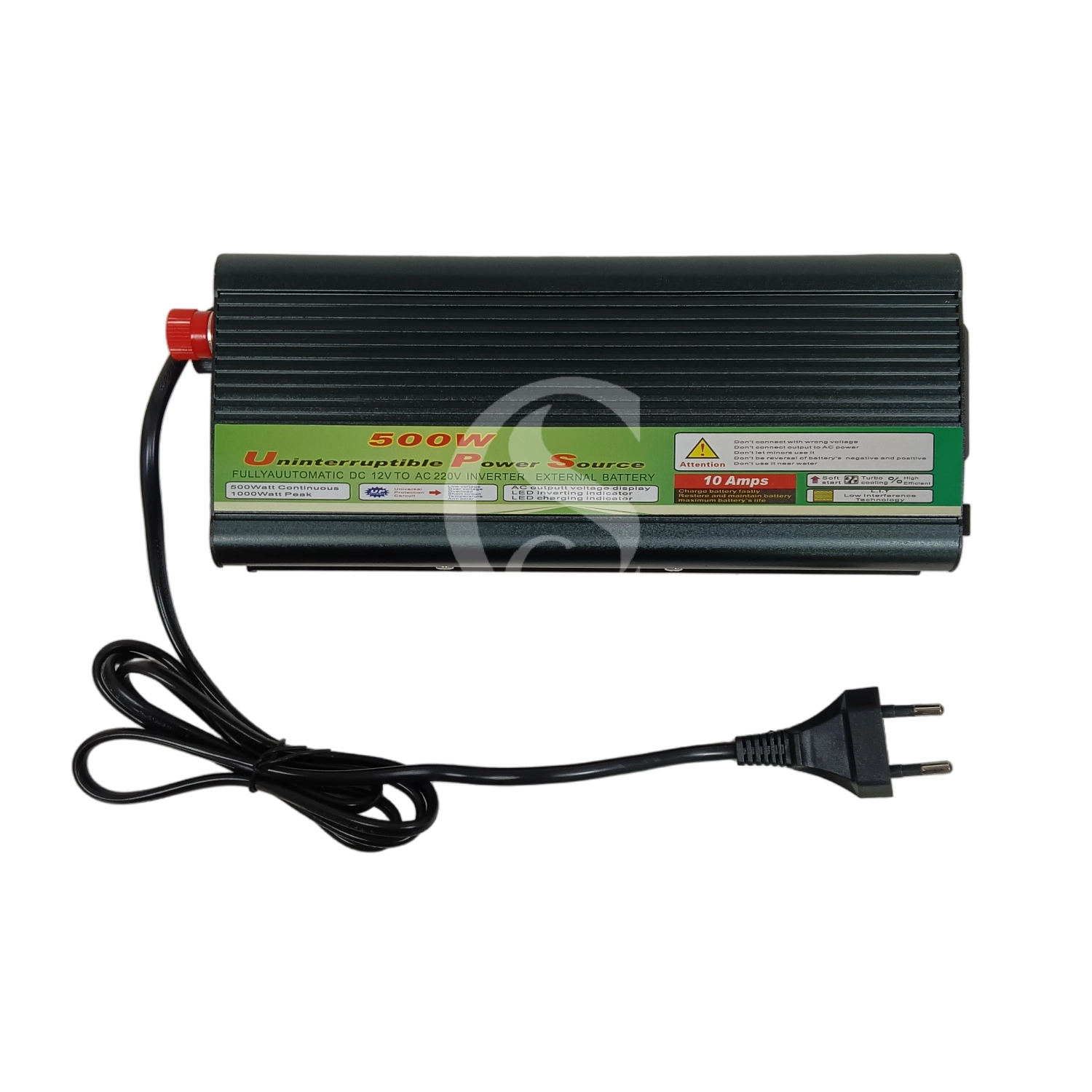
Congsin 500W 12V to 220V inverter delivers reliable off-grid power with its modified sine wave design. This portable 500W DC to AC power inverter efficiently converts 12V DC to 220V AC, ideal for outdoor and emergency use. Trust Congsin for stable, portable energy solutions.
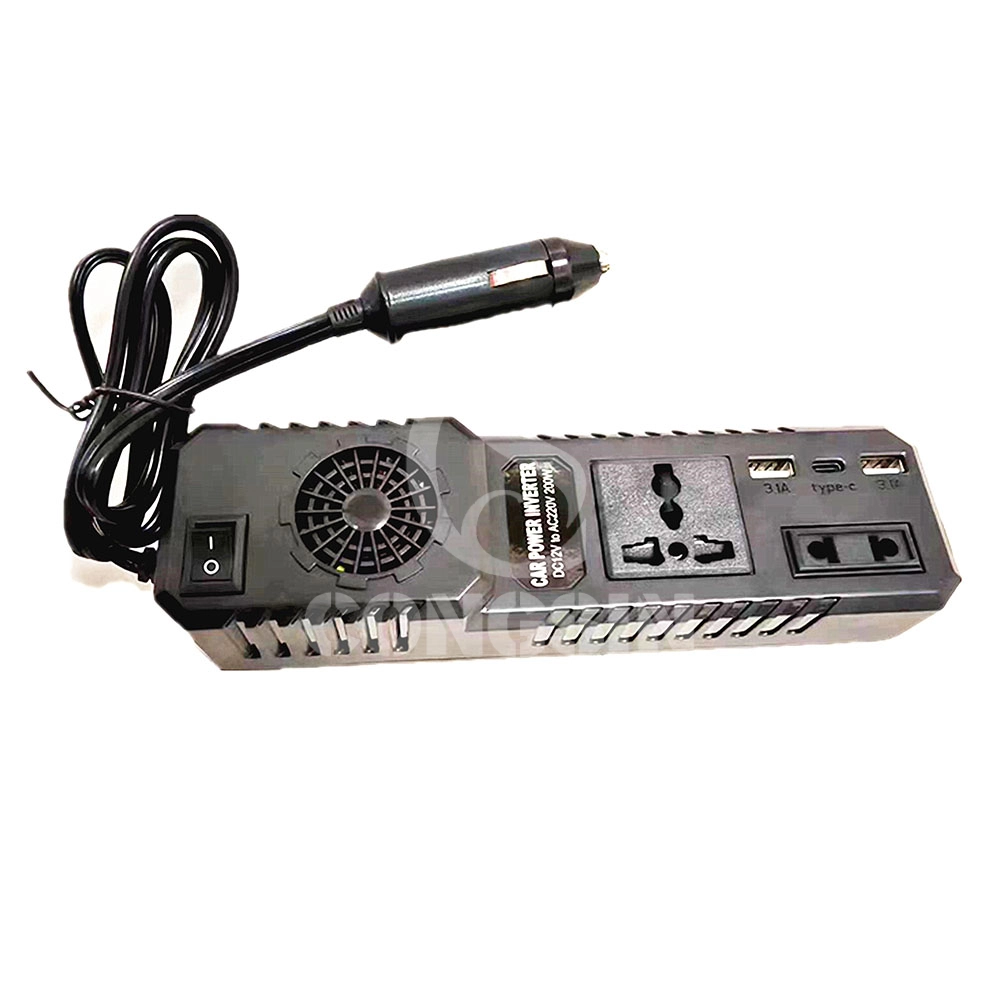
This 200W Modified Sine Wave Car Power Inverter is a compact and practical power conversion device designed for vehicle use. It supports dual input (DC12V/24V) and outputs AC220V, compatible with various electronic devices. Equipped with a Type-C port and dual 3.1A USB outputs, it can charge laptops, phones, cameras, drones, and other small electronics simultaneously—perfect for outdoor travel, emergency backup, and mobile work scenarios.
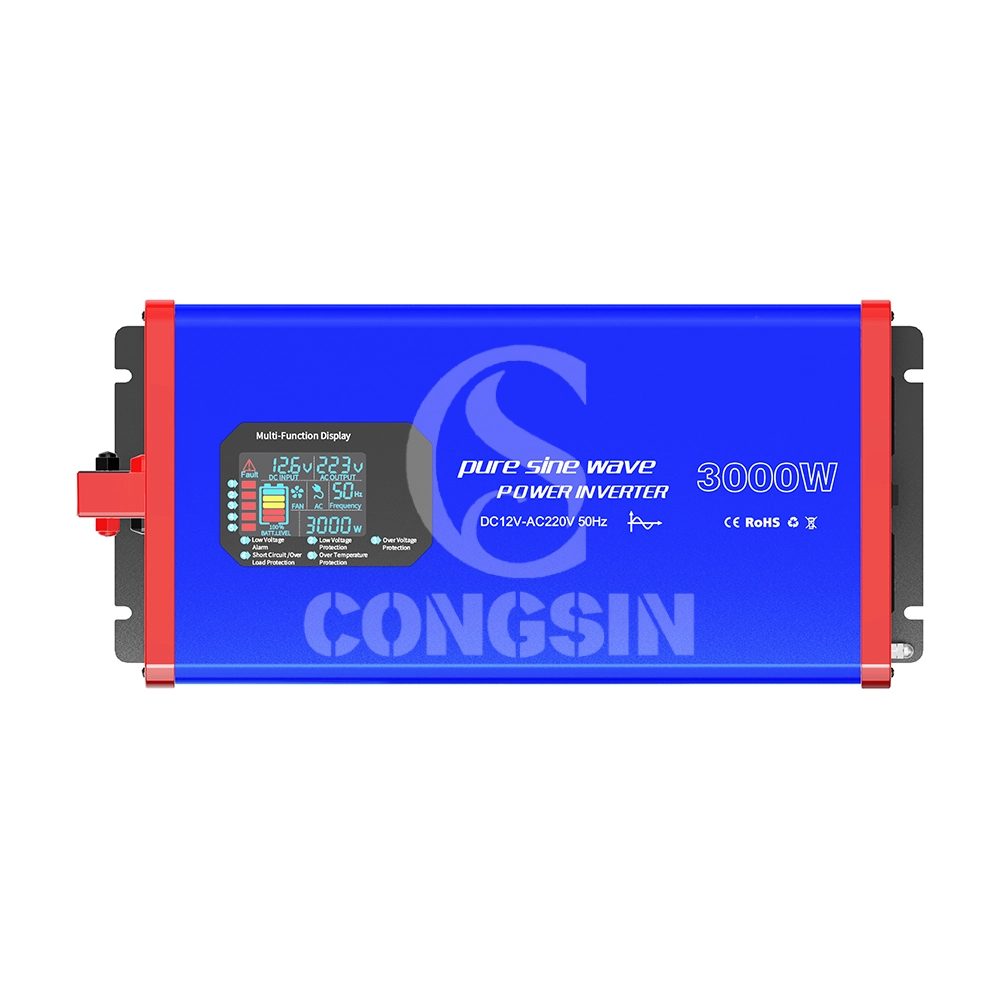
This 3000W full-power pure sine wave inverter (Model: CS3000PSW) adopts pure sine wave output technology (waveform distortion rate <2%), and the output power is highly consistent with mains power quality. It can safely drive high-power precision loads such as air conditioners, refrigerators, medical instruments, and small industrial equipment, avoiding equipment malfunctions or shortened service life caused by unstable waveforms. The device supports DC 12V input (compatible with 10.5V-14.8V wide voltage), continuously outputs 3000W full power, and has a peak power of 6000W, easily coping with the instantaneous startup impact of high-power devices; it is equipped with 4 AC universal sockets (max current 16A) + 2 USB 3.0 fast-charging ports (22.5W per port) to meet the simultaneous power supply needs of multiple devices. Built-in six-fold safety protection (overload, overvoltage, undervoltage, short circuit, overtemperature, reverse connection), combined with dual intelligent silent cooling fans (noise ≤45dB), it achieves the triple advantages of "high power + high safety + low noise," suitable for home emergency, outdoor engineering, vehicle-mounted power supply, small industrial scenarios and other fields.
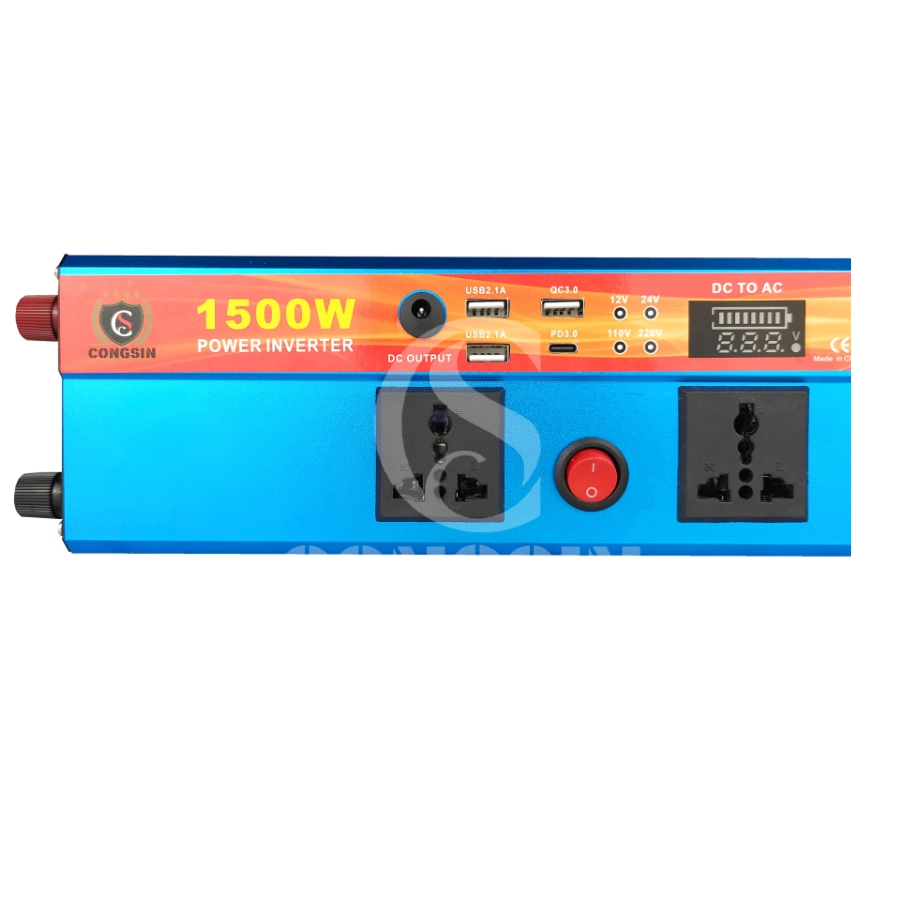
Our CS1000DDBC 1000W modified sine wave inverter is a professional power conversion device that converts DC 12V from batteries into AC 220V electricity. It is designed with user convenience in mind, featuring an LED display for real-time status monitoring, multiple charging ports (3 USB, 1 Type-C, 1 DC 12V) and two universal sockets to power a wide range of devices simultaneously. Its compact size (250×95×55mm) and lightweight design (NW: 0.84kg) make it easy to carry, ideal for outdoor activities, emergency home use, and on-the-go power needs.
Get in Touch with Our Team
You can also communicate with us directly through our online contact form. Please fill in the following information, and our team will contact you as soon as possible after receiving your message.

CONGSIN is a trusted OEM factory for power inverters, solar charge controllers, and DC converters. Reliable solutions for global B2B buyers.
 High Quality
 7/24 Service
 Guaranteed Warranty
© 2025 Congsin. All Rights Reserved.
 WeChat
 Scan QR Code
sin cong
teaimei10
Whatsapp: +8618028086791
Scan QR Code